Why high-performance composites are redefining the sports market
In the world of sport, it is all about tenths of a second, millimeters, and the perfect feel. Anyone who wants to play in this league does not need standard materials, but material innovations that make the difference. Patents and transactions around IP rights thus become an early indicator: they show where trends emerge, where market maturity is picking up, and where companies integrate external technology faster than they develop it internally.
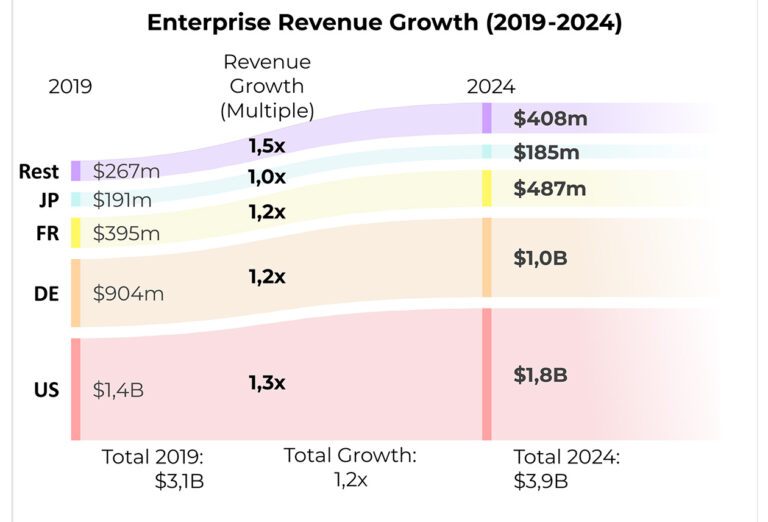
Here, the sporting goods industry reveals itself as the ultimate test field for fiber-reinforced composites. Annual revenue growth of 5.6 % (2015 – 2024) for this market sounds solid? It is! And IP (innovations and patents) proves to be a genuine value investment. An average patent value of USD 660,000 shows that your ideas sitting in a drawer are not just cost centers, but real assets.
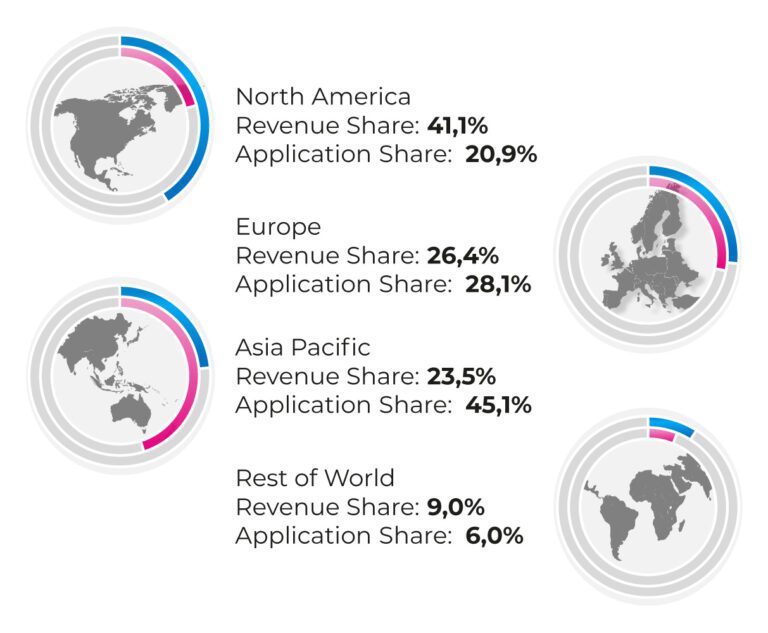
The global distribution of market and IP shares highlights an exciting division of labor. While North America drives revenue (41 %), Asia is the workbench of innovation (45 % of new patent filings). And us in Europe? We counter with precision and high-end engineering – which represents an enormous opportunity for differentiation.
Composites in Sports Equipment 2008 – 2025
Where material innovation translates directly into revenue
From a technological perspective, the focus is shifting away from pure weight reduction toward complex functional design. Marketrelevant innovations are divided into sports apparel (26 %), bicycles and accessories (22 %), sports equipment (17%), footwear (15 %), water sports (9 %), and winter sports (6 %).
The pace of the industry is remarkable: successful innovations today must achieve a home-to-market of under three years to keep up with fast product cycles. On average, a well-founded material innovation reaches its economic earnings peak only after about eleven years. This longevity makes investments in this sector so attractive for a long-term portfolio-strategy.
Ownership transfer as a mirror of market strategy “Buy or build yourself”?
The high ownership-transfer rate of 26 % underscores that established players are increasingly buying external innovations instead of developing them internally over a long period. For R&D-oriented SMEs this means: the market is extremely dynamic and your innovations are sought-after acquisition targets – whoever has a good technology quickly becomes an acquisition candidate. For large corporations, it is a signal to closely interlink M&A strategies with the R&D roadmap to radically align their own portfolio with the pressure to innovate.
Conclusion
The sporting goods industry is not a “niche hobby”. It is a highly professional market that is hungry for new material solutions. Those who invest in intelligent composites today secure patents with real market value and benefit from a long-lasting innovation cycle.
Typical applications include structural components in bicycles and sports equipment, as well as reinforcing sole components in footwear, in each case for load path-dependent stiffness-to-weight optimization and control of dynamic response. In protective systems, such as helmets and protective gear, composites are also used for energy-absorbing designs, often via controlled damage mechanisms such as delamination.
Contact:
white ip | Patent & Legal GmbH
Dr. Leopold Gruner, Patent Attorney
Max Drogla, Data Analyst Patent Department
Phone: +49 351 896-921 40
kontakt@white-ip.com
www.white-ip.com