If all child seat headrests were produced using lightweight technologies, a substantial reduction in carbon emissions could be achieved across the automotive and transport sectors. By replacing virgin PA6 with 100 % recycled feedstock reinforced with unidirectional tapes, manufacturers can significantly reduce CO₂ emissions while maintaining or even improving mechanical performance.
This manufacturing approach delivers a key benefit of up to a 34 % reduction in CO₂ footprint compared to a headrest made from virgin PA6, together with a 20 % weight reduction versus conventional injection-molded parts. Importantly, the lightweight solution maintains the same level of impact energy absorption as the virgin material, ensuring uncompromised safety.
Additional advantages include the use of recycled marine waste and the implementation of circular design principles for safety-critical components, strengthening both environmental responsibility and longterm sustainability.
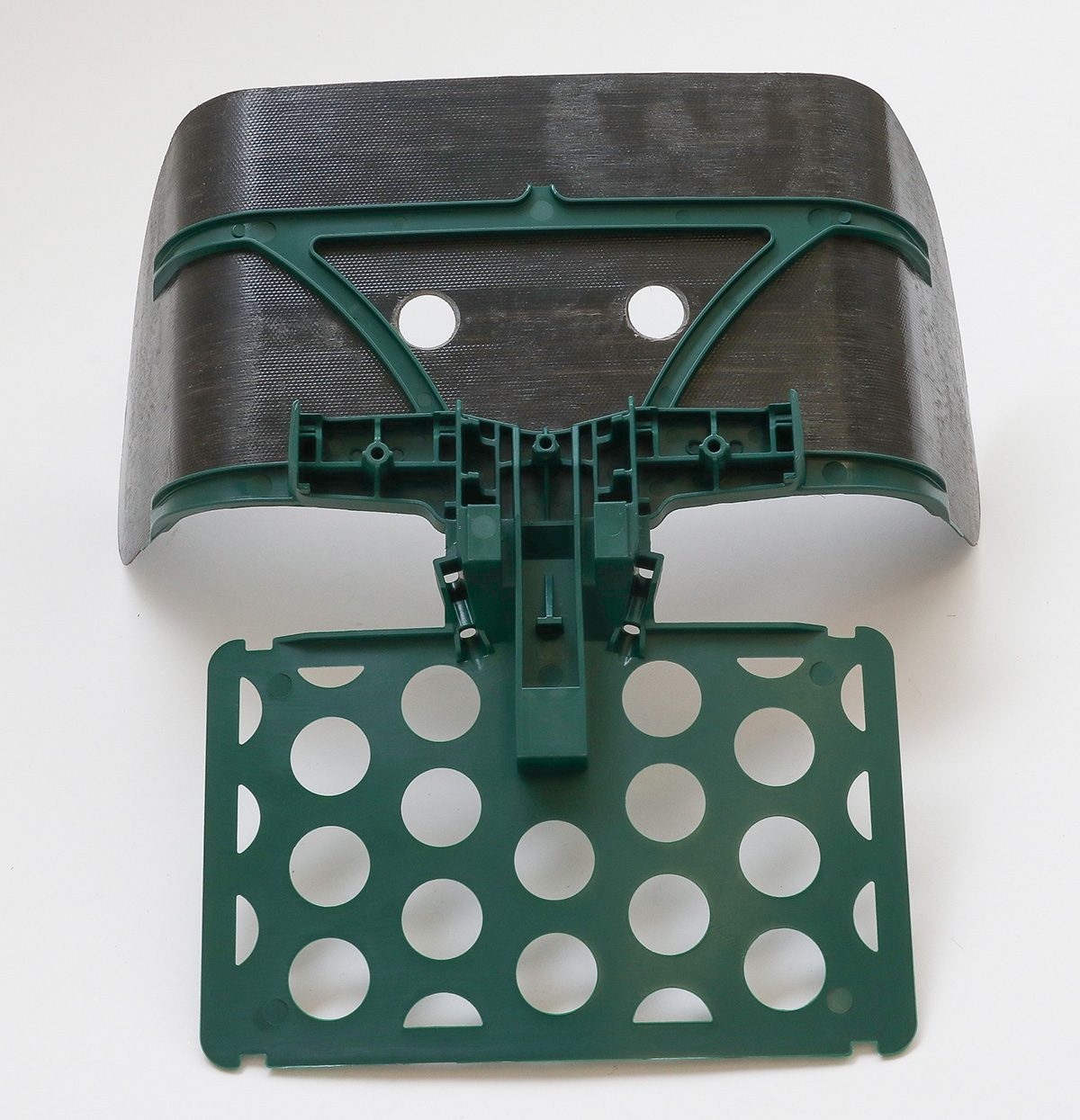
Headrest (© LSE)
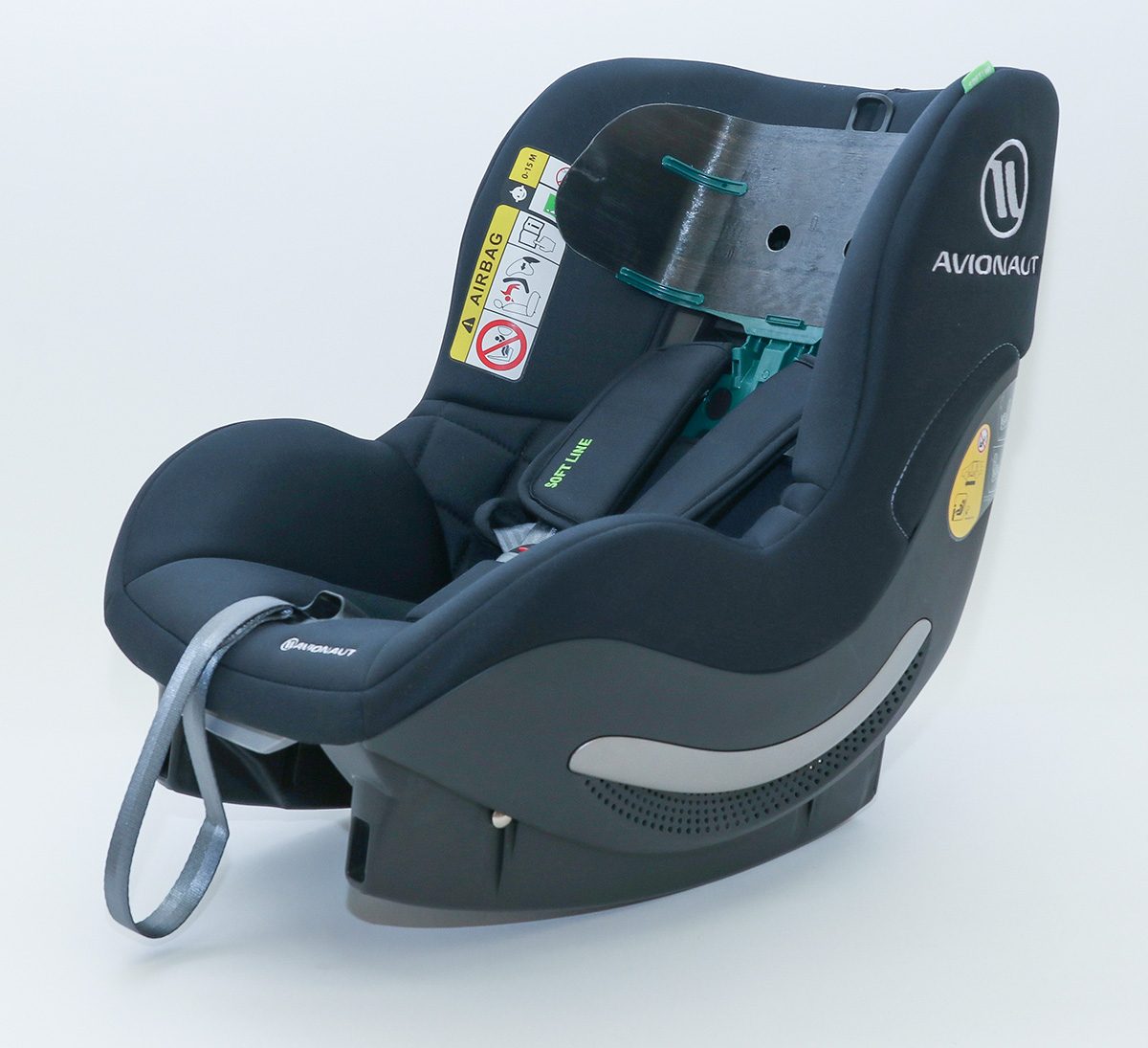
Child seat with headrest (© LSE)
Project content
The hybrid composite child seat headrest represents a breakthrough in sustainable lightweight design. It combines mechanically recycled polyamide 6 (PA6) with advanced unidirectional (UD) tape laminates to achieve outstanding impact performance in a safety-critical application. This innovation demonstrates that high-performance safety components can successfully integrate mechanically recycled materials without compromising safety.
Manufactured using an efficient single-step hybrid molding process, the UD tape insert is thermoformed and directly back-injected with post-consumer recycled PA6, integrating the support structure for both headrest and backrest. This enables a lean, cost-effective, and scalable production route for sustainable safety components.
Discarded fishing nets collected in Africa (by the Sea2see Foundation) are used, reducing ocean waste and its negative impact on marine life. Plus, it will add more value creation.
Evaluation
The project also demonstrates how interdisciplinary collaboration along the entire value chain can lead to innovative, sustainable solutions for safety-critical applications. Material development process integration, component design, and environmental impact assessment were considered holistically and successfully implemented in a functional demonstrator.
By combining recycled polymers with composite technology, new application fields for post-consumer recycled plastics are unlocked. The main value lies in achieving a 34 % CO₂ reduction and 20 % mass reduction compared to a conventional virgin PA6 headrest, without any loss in impact energy absorption.
So the project demonstrates that sustainability, safety, and lightweight construction are compatible with one another. The result is a scalable pathway toward circular, lightweight, and sustainable design across industries.
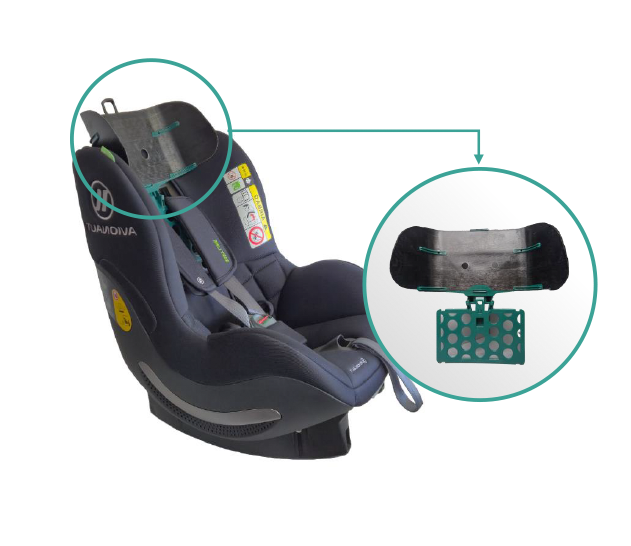
Child seat with headrest (© LSE)
Developed within the EU-funded RaRe² project (www.raresquare.eu). Extensive crash testing confirmed equal energy absorption compared to virgin material.
Project partners: thermoPre Engineering GmbH; LSE GmbH; Avionaut – L. Karwala sp. k.; Chemnitz University of Technology – Institute of Lightweight Structures; DOMO Engineering Plastics Europe S.p.A. Germany; Innovation Cluster Circular Saxony – represented by Circular MTC e.V.
Contact:
thermoPre ENGINEERING GmbH,
Sebastian Iwan, CEO
+49 176 20 74 23 28
sebastian.iwan@thermopre-gmbh.de
thermopre-engineering.de