With ‘Innovative Textiles’ (B.Eng), ‘Sustainable Textiles’ (M.Eng) and ‘Composite Materials’ (M.Eng.), the Münchberg campus offers three degree programmes that combine expertise in textile technology, resource-conscious materials science, green chemistry and future-oriented materials development.
The Bachelor’s degree programme in ‘Innovative Textiles’ covers the fundamentals of technical textiles, textile chemistry and modern processing technologies. The programme focuses on innovative textile materials as well as technical fibre composites and their applications. In the Master’s programme in “Sustainable Textiles”, students explore sustainable materials, resource-efficient production processes and the requirements of global value chains. Chemicals management, application technology and product performance for innovative textile solutions play a key role. The Master’s programme in “Composite Materials” concentrates on the development, processing and evaluation of modern composites and technical fibres for a wide range of industrial applications.
Common to all three programmes are practice-oriented teaching, modern laboratory facilities and close collaboration with industry and research. In this way, they specifically address current developments in the fields of sustainability, energy efficiency and high-tech materials.
Over 170 years of textile expertise in Upper Franconia
For over 170 years, the Münchberg site has been synonymous with textile education, materials expertise and industrial innovation. The weaving school, founded in 1854, has developed into a university campus with an international outlook, focusing on technical textiles, sustainable materials and modern composite applications. Upper Franconia’s textile tradition continues to form the basis for research and teaching in fields such as lightweight construction, fibre composite technology and functionalised materials.
Key areas of focus
Course content and skills
- Technical textiles and textile reinforcement structures
- Lightweight design, functionalised materials and composite applications
- Sustainable material and production concepts, as well as the chemical fundamentals of textile processes
- Product- and production-integrated environmental protection in an international context
- Textile applications in mobility, medical technology, sport and industry
- Practical development and manufacturing skills across industrial value chains
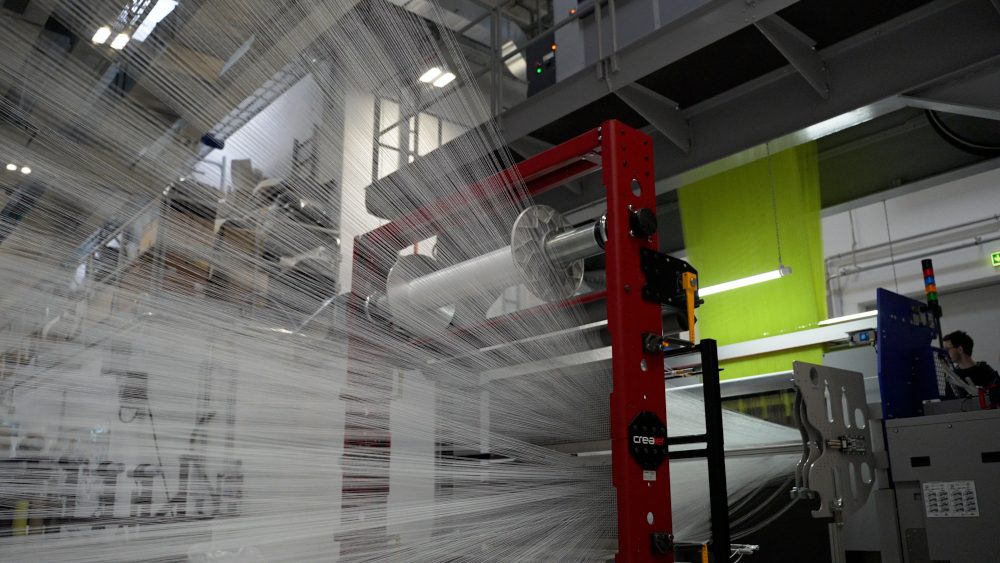
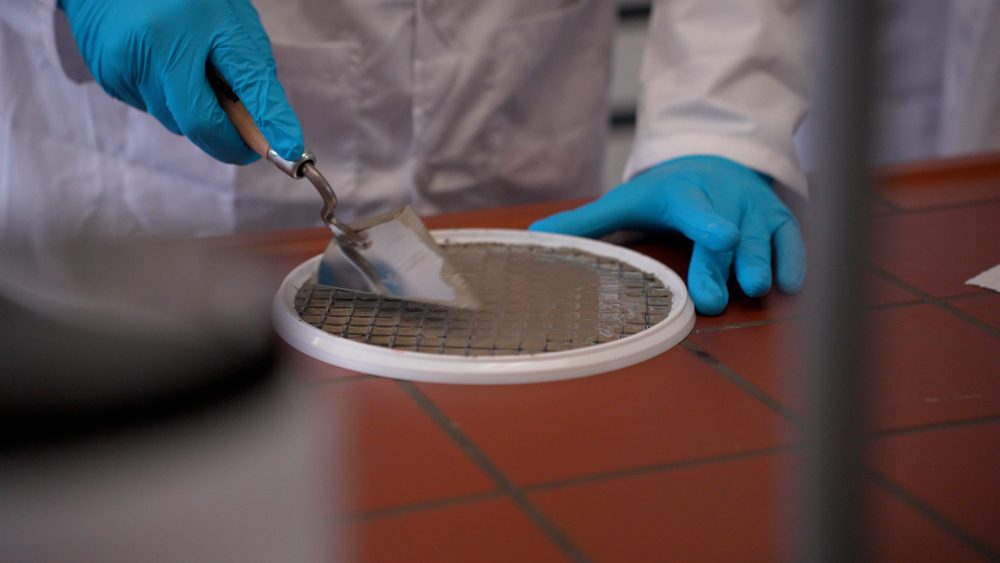
To this end, the Münchberg Campus offers an extensive range of textile technology facilities, including modern pilot plants, laboratories and research infrastructure for spinning, weaving, plaiting, knitting, non-woven fabrics and finishing, as well as composite and materials laboratories.
International networking and a global perspective
The degree programmes offered on campus focus on international and English-language programmes, as well as numerous collaborations with universities, research institutions and industry partners worldwide.
Students are given the opportunity to
- attend international trade fairs,
- scientific conferences,
- textile symposia,
- and industry-specific conferences
where they can gain first-hand insight into the latest developments in research and industry.
This enables students to establish early contacts within international textile and composite-oriented networks, as well as fostering a cosmopolitan study environment with close links to global material and sustainability issues.
Practical relevance, industry partnerships and real-world applications
There is a particular focus on application-oriented teaching and direct links with companies and research institutions in the sector.
Regular field trips and insights into the industry form an integral part of the programme – including visits to companies specialising in fibre-reinforced composites, research institutions and innovative applications in the field of carbon and textile concrete.
For example, students regularly gain insights into modern composite manufacturing at Schmuhl Faserverbundtechnik or into innovative carbon concrete applications in Dresden. In addition, there are interdisciplinary teaching partnerships, for example with architecture students at Frankfurt University of Applied Sciences – enabling textile materials and composite structures to be examined within the context of modern construction and design concepts.
Sustainability and innovative applications of natural fibres
Alongside high-performance fibres and modern composite technologies, sustainability also plays a central role.
At the Münchberg Campus, sustainable textile raw materials and circular economy approaches are brought to life through hands-on experience – including the cultivation of flax on the campus itself as part of various teaching and research projects. Students are involved in the entire process chain, from the cultivation of natural fibres through to material and product development.
This creates an exciting blend of traditional textile expertise, modern materials and sustainable technologies of the future – from natural fibres to high-performance applications.
Hands-on research, technology transfer and textile innovation
The degree programmes benefit from close links to applied research and technology transfer at the Münchberg campus. The latest developments in areas such as sustainable material systems, functionalised surfaces and composite applications are directly incorporated into teaching.
Facilities such as the Institute of Materials Science (ifm) and the Fraunhofer Application Centre for Textile Fibre Ceramics provide direct links to current fields of research in aviation, mobility, construction and medical technology.
At the same time, textile innovation is also brought to the public’s attention – for example, through technology demonstrators, hands-on activities or presentations at events and specialist forums. This enables students to experience at an early stage how research, industry and societal applications are interconnected.
An overview of the degree programmes
| Innovative Textiles (B. Eng.) |
|---|
| The Bachelor’s degree programme in Innovative Textiles is your gateway to the fascinating world of textile chemistry and technical textiles. Here, you will learn the fundamentals of innovative textile materials science and modern processing techniques. From fibres and yarns to textile fabrics and their surface finishing – our practice-oriented curriculum prepares you for engineering challenges, enabling you to optimise textiles from technical, economic and environmental perspectives. At the same time, you will receive the best possible training in the development of technical fibre composites and research into advanced textile chemistry, enabling you to master the challenges of the modern textile industry and develop innovative solutions. |
| Duration: 7 semesters |
| Start: Winter semester |
|
Application period: May 1 - July 15 |
| Tuition fees: none |
| Classroom language: German, English from the 3rd semester onwards |
| More information |
| Sustainable Textiles (M. Eng.) |
|---|
| On this Master’s programme, you will gain in-depth knowledge of the challenges facing today’s global textile and clothing industry. The programme focuses on raw materials, the use of chemicals, and responsible and environmentally sustainable production processes, as well as product quality, the circular economy and textile waste management. The programme covers legal regulations and labour rights, certification, and the creation of transparency within the complex global value chain, with a view to shaping the textile industry of the future. During your studies, you will acquire the necessary skills to develop and optimise future processes in textile chemistry, as well as to conduct research into innovative fibres and finishes. |
| Duration: 3 semesters |
| Start: Winter- and summer semester |
|
Application period: Winter semester: April 15 - May 31 / Summer semester: November 5 - 30 |
| Tuition fees: none |
| Classroom language: English |
| More information |
| Composite Materials (M. Eng.) |
|---|
| The Master’s programme in Composite Materials aims to provide students with in-depth expertise in this field. Composite materials – known as ‘composites’ – are a modern class of materials tailored to specific applications, combining the beneficial properties of several base materials. Current developments in the areas of sustainability and energy efficiency require new approaches in the field of composite materials. Graduates acquire the skills to develop and evaluate composites and technical fibres. They possess in-depth knowledge of materials and surfaces, as well as practical expertise in developing innovative solutions across a wide range of industries. |
| Duration: 3 semesters |
| Start: Winter- and summer semester |
|
Application period: Winter semester: July 15 Summer semester: January 15 |
| Tuition fees: none |
| Classroom Language: German |
| More information |
Others
In addition, the Innovative Textiles degree programme offers the opportunity to undertake a dual study programme through Hochschule Dual whilst working in a company.
Furthermore, degree programmes in textile and communication design are offered at the Münchberg campus.
The Textile Vocational School rounds off the local provision by offering the opportunity to train for careers in the textile sector.
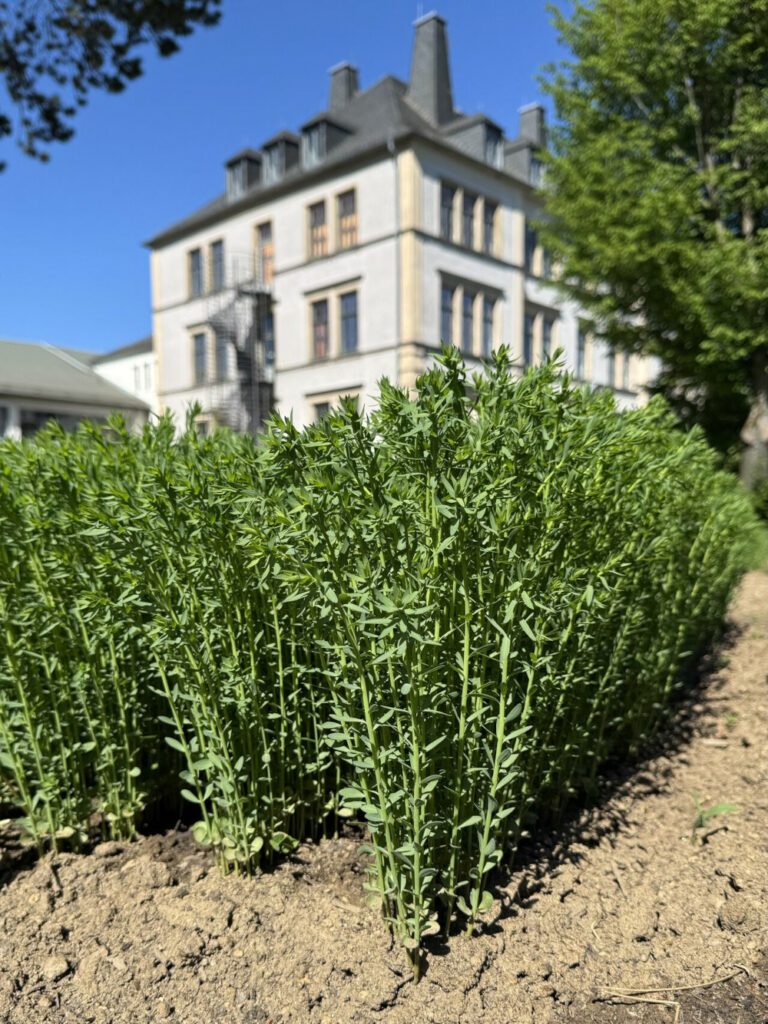
© Dorothee Walther
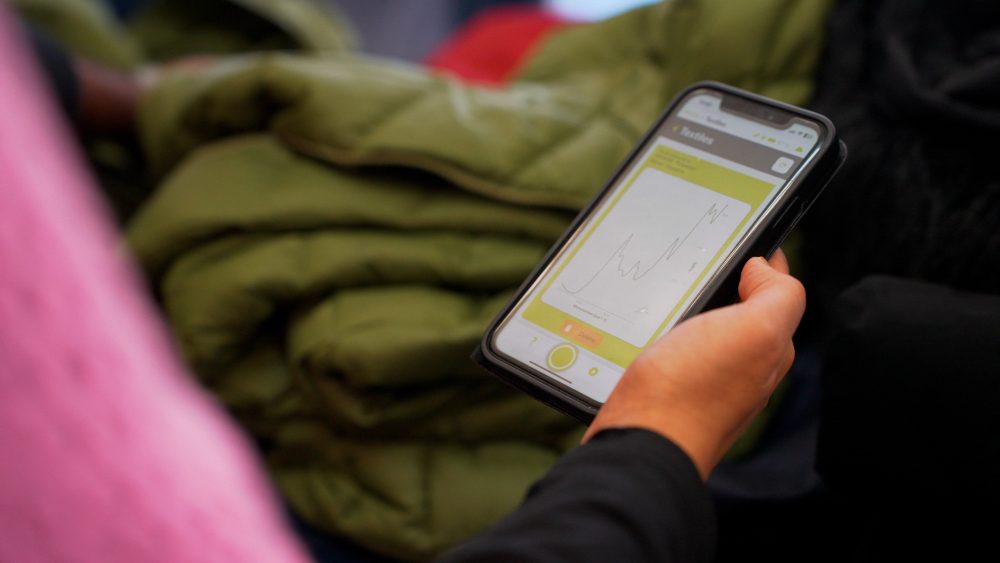
© Hof University of Applied Sciences